Week 14:
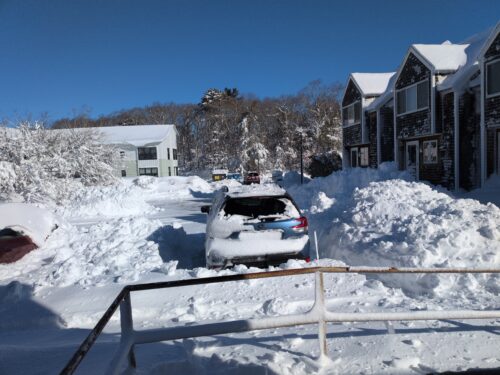
This one is short. A significant blizzard moved through the region and shut down WHOI campuses for the first four days of the week. Roads were closed to unnecessary travel and many of us were without power for days. It was certainly an interesting time, though some of us did fit in some sledding and board games.
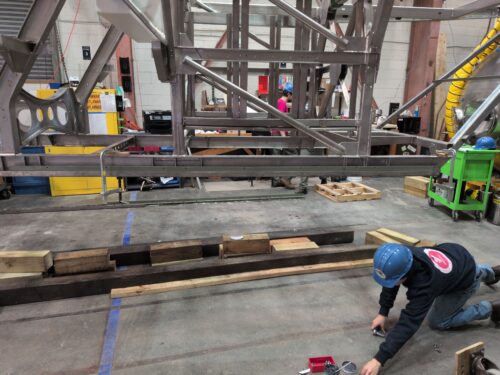
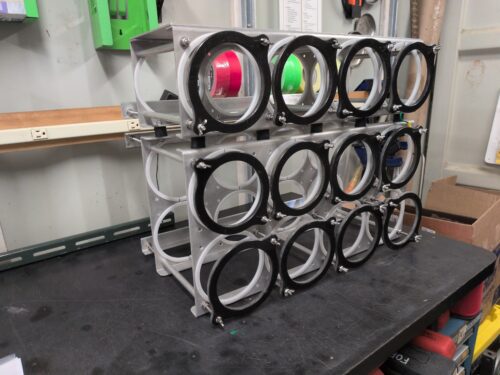
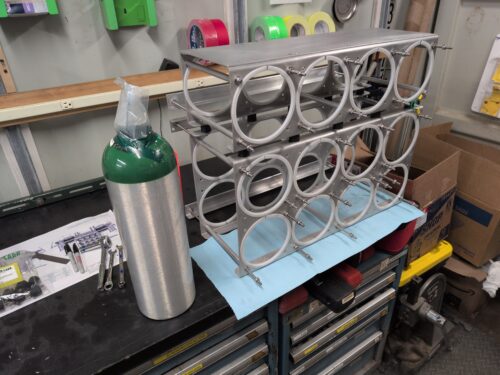
Fortunately, the crews working to clean up after the storm and restore services had things back in order by late Thursday, and work resumed Friday. I picked back up on the oxygen rack cleanup where it had been left off. And helped the mechs remount the skids to the bottom of the frame. These protect the extremely expensive titanium frame by taking the brunt of the damage caused by Alvin resting on rough surfaces like concrete, rocky seafloor, and the ship deck.
Week 15:
The oxygen rack cleanup wrapped up Monday, bringing that project to a clean close.
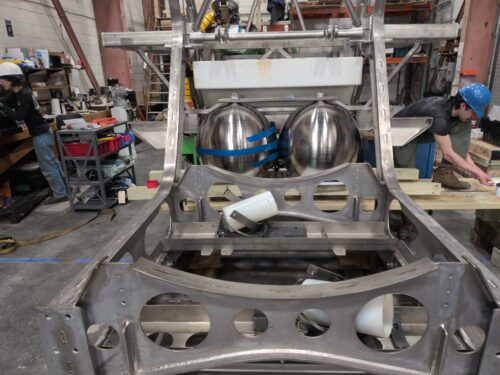
Tuesday brought continued work with the mechanical side of things. I helped the mech team reinstall the forward variable ballast spheres, the same titanium spheres that were cleaned and borescoped previously, now making their way back into the vehicle as reassembly builds momentum.
On Wednesday we were testing the Inductively Coupled Links (ICLs) after they had been loaned out for a non-Alvin cruise. ICLs use inductive coupling to create a very short range wireless communications link between temperature probes and Alvin, allowing collection of seawater temperature data without each probe being wired directly to the vehicle. This allows multiple temperature probes to be mounted on the science platform with only one required wired connection into Alvin, as the manipulator arm can move the reading device between whichever probe is needed. Testing included the usual visual inspections, probe calibration checks, and verifying the expected data over the serial link. One faulty ICL was found but repaired easily, as it was simply a failed solder joint on a wire-to-board connection.
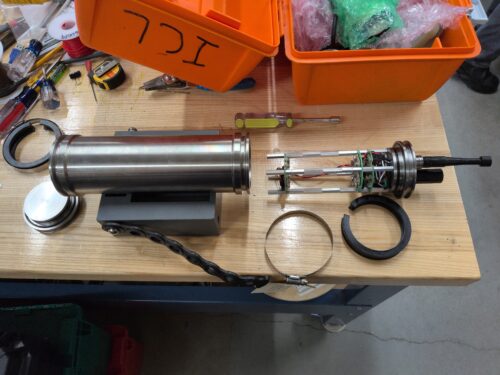
The rest of Wednesday was spent back in the birdcage, continuing the AV wiring work, along with a few control system wires, and some improvements to component labeling.
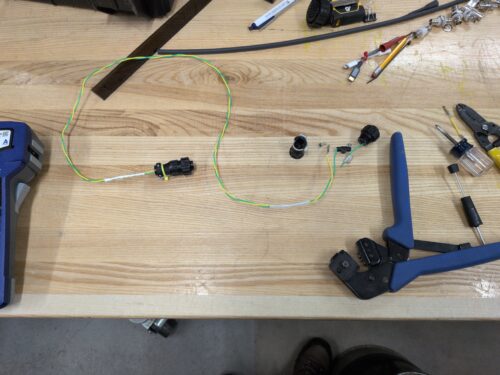
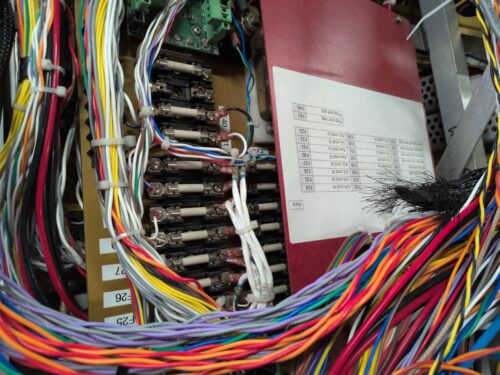
Thursday I remained in the birdcage, finally completing the wiring work. Sadly I didn’t manage to get any pictures of the finished AV wiring. You’ll just have to believe me that it looked very clean, as the birdcage began disassembly soon after for re-installation of the wiring harness and equipment back into the sphere.
The week ended a day early for me, as my Friday was spent in bed sick.
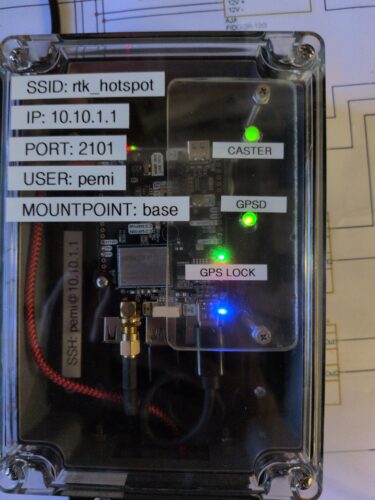
Over the weekend I finished a school project that I had been working on over many weekends this semester. A mobile GPS base station that provides RTK correction data to an aerial drone, giving it more precise positioning than the drone’s onboard GPS receiver alone. The tough part was building it to operate as a standalone system in remote regions with no cell service or internet connection. Made easier by the control of configuration provided by device using open source software and mostly open source hardware.