Late on the 18th (or early on the 19th), we recovered one of the malfunctioning ocean gliders. We will return it to shore for analysis. More importantly, that operation marked the completion of our mission here in the North Atlantic. The 19th marked the first full day of transit, and we reached the Straits of Bell Isle on the 22nd. Although we were still in pretty protected waters, the weather reared up, bring our speed down to 2-3 knots. Our loved ones ashore kindly reported that our ship tracker (Where is Knorr Now?) made it look like we’d barely been moving. After the big run over, it felt that way, yoo
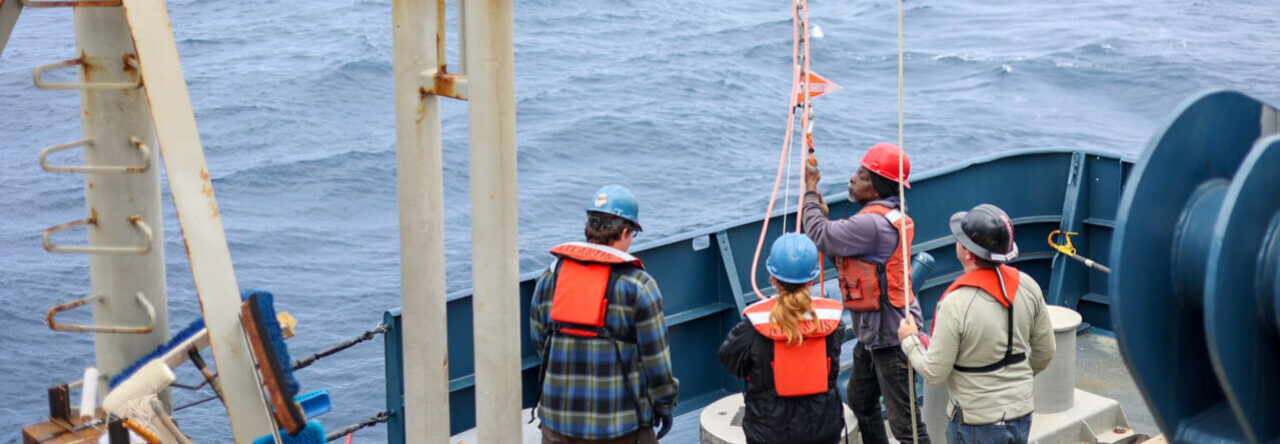
Around the ship, operations continue, with the primary focus being on prepping the gear for offloading in Wood’s Hole. There is that midway point in packing, where you have to stop or else you find yourself without your toothbrush, which is reflected in the status of many containers around the boat. Most of the big supplies are loaded, but laptops and other personal items are still out. Theu are being used to produce portions of the cruise report for our Chief Scientist. By collaborating, we get input from the most relevant sources, and it is something to really be proud of.

As we transit through the Gulf of St. Lawrence*, I take an opportunity to do some inventory work. It actually isn’t as boring as it sounds – going through the racks down in dry stores was an interesting lesson in the wide variety of support services the techs provide. Everything from printer toner to computer modules to XBT probes was down there. The XBTs were new to me, but are actually a pretty time-proven technology. The eXtendable BathyThermograph probe is essentially a lead weight, thermometer, and spool of thin wire. This small device is launched over the side, and, with a constant sink rate, gives a snapshot of the thermal water profile. Quicker than a CTD, and able to be consucted underway, these disposable devices provide researchers with up-to-the minute information.
*Fun fact: it is the most extensive estuary on the planet.