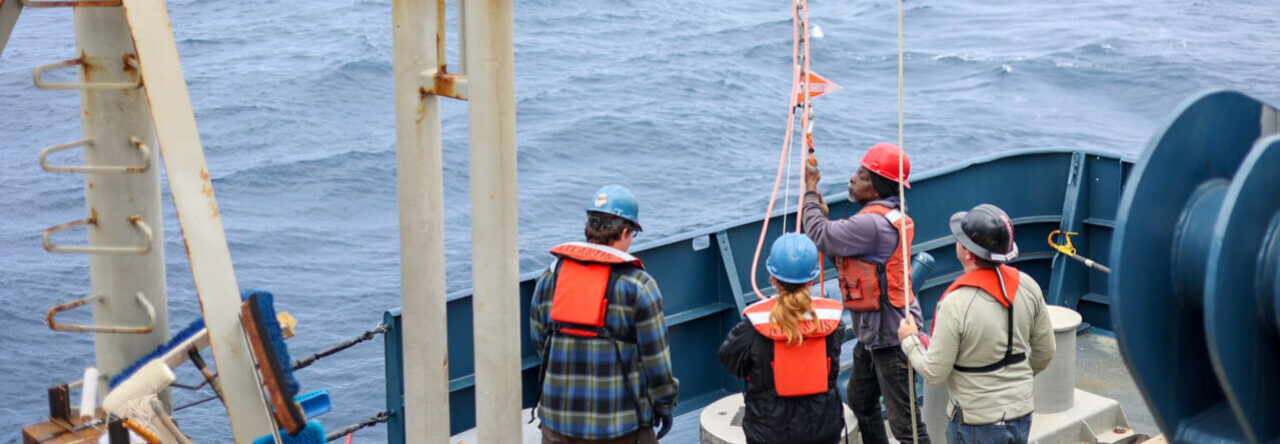
Our cruise in Mexico is now over and I have set my legs on land. I spent the last day before entering my dorm on the boat and assissting in several technician projects that needed to be done prior to the following research cruise. The science crew showed up later our first day back and most of the day was spent preparing for their needs on board. More specifically, I worked on preparing our CTD. Our CTD rosette was lost to sea last cruise and now we must employ a much smaller option. There are many sensors mandatory for this trip, even a horizontal niskin bottle that must be rigged to the bottom, so it has been difficult to make room for everything. Nonetheless, my mentor and I successfully rebuilt a whole CTD sensor and pump system. The experience was extremely beneficial for me, as I was not only allowed to switch our sensors, but also rig a complete system from scratch.
After working on the CTD, fixing our weather station attenaes aboard our mast, and supplying an extra hand on deck, I made my way back to my dorm. While it was sad to see the vessel leave, I am excited to enhance my technician and boating skills in a new environment.
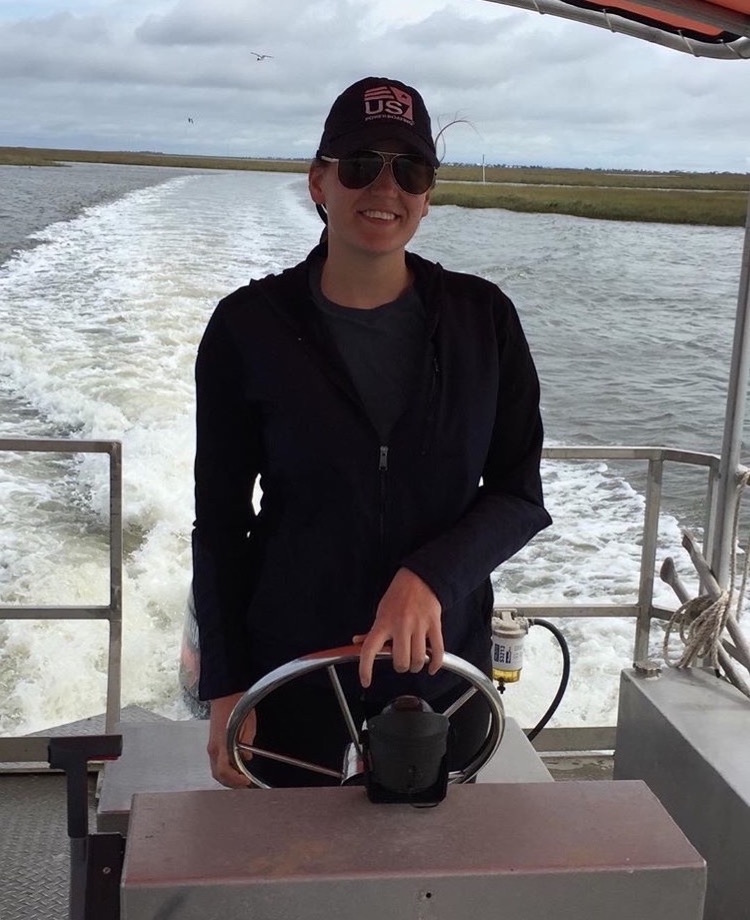
My first few days back on land I worked with our small boat manager, Carl, for the remaining of the week learning about boat fueling, repair and maintenance. I will also be helping with the environmental monitoring systems as well towards the end of the week. My first day back was slow and I mostly shadowed Carl around the ship yard fixing small boats. I spent the remainder of my time driving and preparing our pontoon boat, as I will be captaining an education class come Monday. Prior to my time on docks, I have never driven a pontoon boat- but the same general rules of small boating apply. The pontoon boat uses a two-stroke engine and I spent the day driving around the bayou in preparation for Monday. The bayou area is very low and tidal influxes are small in range- unlike up North where you can see a ten-foot change within only a few hours. With this in mind, I went through the bayou for a while with Carl to get a feel for new landmarks and areas of precaution, such as oyster beds. It is a tricky area and you have to constantly pull your engine up to prevent from sucking in mud. Luckily, mud is not as damaging to an engine as sand and you can easily clean your engine out with flexible wire while driving, if your “piss” hole becomes clogged. Attached below is a very smiley picture of me driving my first pontoon boat!
Pontoon trip:
My class arrived around 8:45, which gave me time to set the boat up in the morning, start my engine, prep my ropes and prepare my life jackets. There were several educators on board, which made captaining much easier as I could just focus on driving. I gave a quick safety brief in the beginning and then drove them over to a marsh platform for sampling. Essentially, I edged the top of my boat unto the marsh in neutral, so we can sit around for a while without drifting or floating away. Around noon, the class was ready to return and I used a boat hook to push us away from the marsh and slowly backed up without churning up mud in the very shallow areas. All in all, it was a successful trip. I spent the remainder of the day helping out Carl.
I spent the remaining of my time this week running a few day trips on our research vessel the R/V Acadiana- which is much smaller than the Pelican but is a very capable vessel. Before our trip, we added in new windows, new navigation systems, new tile and a new captain’s chair and counsel. The task was lengthy but we are all prepared for tomorrow. We are set to leave around 7 am with a class and plan to go around the Gulf of Mexico (a very short drive from LUMCON) and spend the day doing mud coring- a memo I did not receive when I showed up in my brand new sneakers- lesson learned.
R/V Acadiana Trip
I met with our deck hand and other tech at the boat around 6:30 am to prep for our morning departure. I spent the morning cleaning windows, starting the boat engines up and removing the boat from shoreline power. It took a few hours to get to our first station, which gave me a great opportunity to drive to our location. The Acadiana does not have auto-pilot yet, so I manually drove the boat- which is far trickier than the Pelican because the steering is very sensitive and deviates from your position, so you must constantly turn your lever back and fourth to keep a straight course. Throughout the day, we did about 50 or more mud cores and around 4:30, headed back to make it to the docks around 7:30 pm. I spent the evening cleaning off the boat, which was covered in mud, and turning the rest of our switches off. It was nice to drive another research vessel, as every vessel steers and drives differently.
Attached below is a picture of the R/V Acadiana.
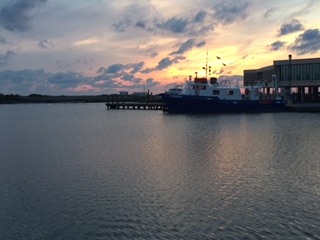
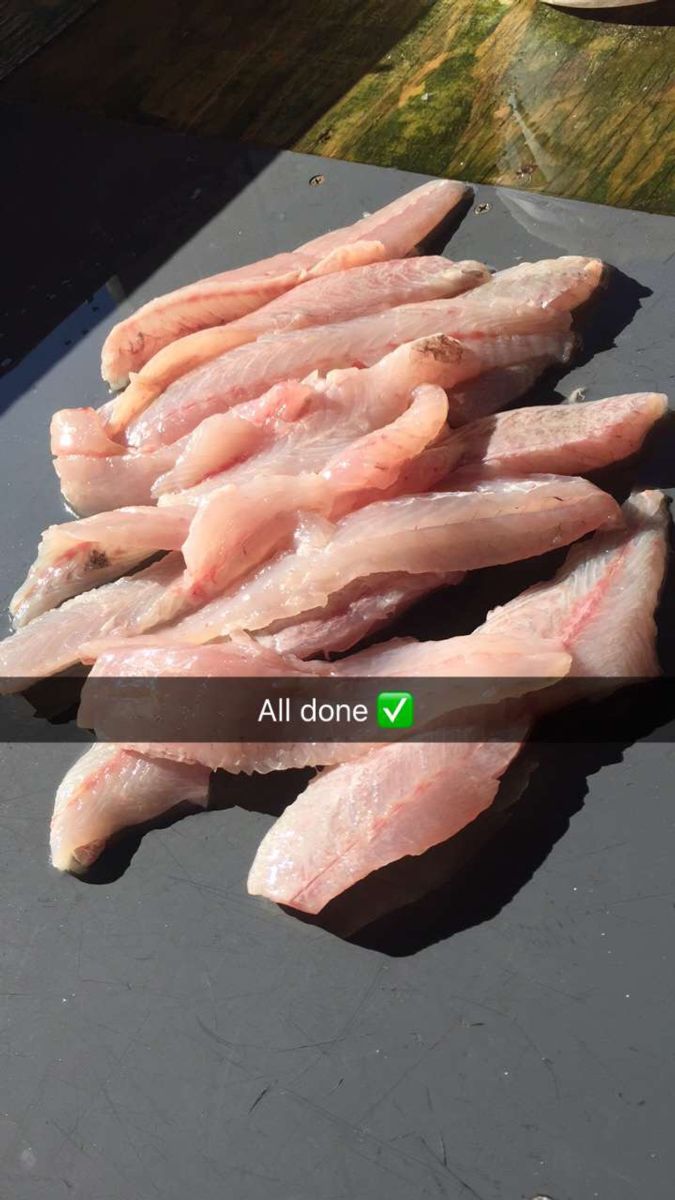
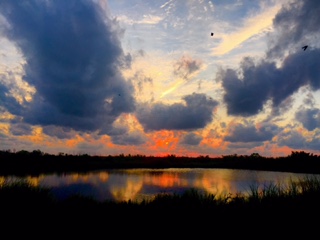
A story of Southern hospitality at its finest: During this week we had a very large storm which made many food places closed. Our chef was out for the week and it was hard for me to find good food. Our security guard Kenneth, an older guard at Lumcon, caught a surplus of fish for me, taught me how to fillet them (it was my very first time) and fried them with me for several nights in a row! He even made me beignets, brownies and brought me several other snacks and goodies throughout the week. I have never met Kenneth, but we treated me like family and I will be eternally grateful for his kindness- and even the gut I grew during my time! I posted a pictur below of a sunset we saw while fishing and a set of my first filleted fish. Enjoy!