
The heat and humidity rise as we approach the equator. The water is unbelievably warm, pushing 30 C (thirty is hot, twenty is nice, ten is cold, zero is ice) some days. Its color is a deep, clear blue: indicating oligotrophic waters, which lack the nutrients for much life to thrive. Still, flying fish scatter in all directions as the ship plows forward and kicks their flight response into full gear. Amber fronds of sargassum float by, patches growing larger and becoming more frequent with each passing day.
For the past decade or so, sargassum has bloomed in unprecedented amounts. It coagulates in massive mats (large enough to spot with satellites) that float along the warm, equatorial current and land on some unlucky beach in their path. Mounds build up and begin to rot, releasing sulfuric gas as they decompose, thus uprooting beachgoers and disrupting entire intertidal ecosystems. It is an expensive and difficult mess to clean up. For a bit, it was thought that the seagreen had potential as cattle feed or fertilizer, but when trace amounts of arsenic were found in sargassum tissues, those ideas were ditched.
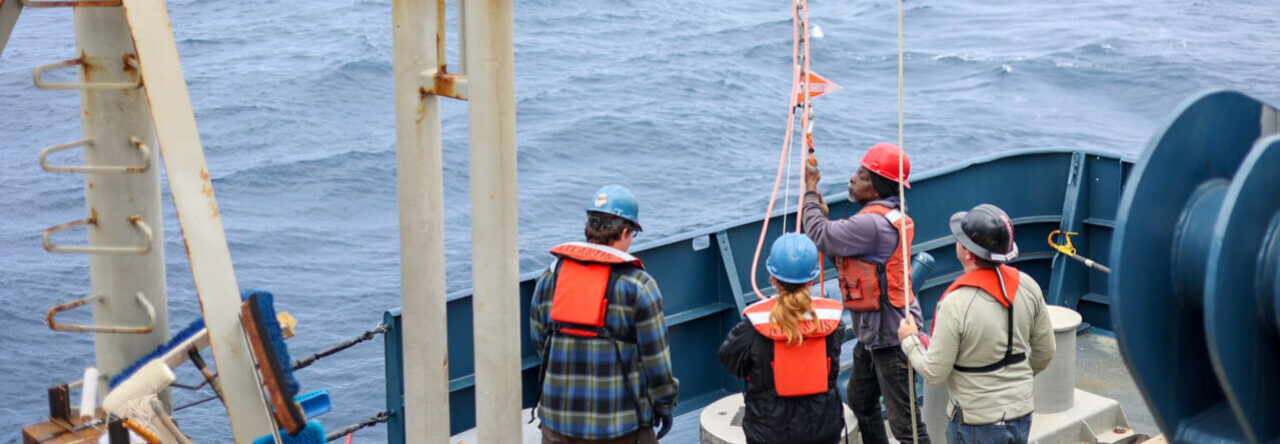
As a favor to a previous chief scientist, the techs have agreed to conduct some opportunistic sampling as we transit south. As we pass through the sargassum belt, we pause to collect water and snag a few handfuls of tissue samples (using a custom-made sargassum grappling hook). I get the chance to put my undergraduate research experience to good use, since with every station there is a good 5-6 hours of filtration to process the samples. Fortunately, I actually enjoy the tedium and repetition of filtration, for with practice comes efficiency, which is so so so satisfying. It feels good to have the chance to participate in a research project in this way, especially one with such an interesting story.