Howdy everyone,
Since my last update, a lot has happened. I’ve just finished the first leg of my 6-month MATE Internship!
When I last checked in, the R/V Hugh Sharp was waiting near Nantucket for a break in the weather in the sea scallop survey area to redeploy the (now fully operational) HabCam. After patiently waiting for days, we finally saw a potential break in the weather. We took the chance to head into the survey area to collect data. However, on the way, one of our seasick researchers helping with scallop annotations had a little run in with a desk and ended up with a rib injury. We were concerned about the severity of their injury, and with the realization that it was too rough to deploy the HabCam, we decided to head back to Woods Hole to get the researcher medical attention and wait for the weather to improve.
After dropping off our injured researcher, the weather finally cleared up. We safely returned to the survey area and managed to collect a full day’s worth of data, covering approximately 50 out of the 53 stations! By the end of the cruise, we had made up for the time lost waiting near Nantucket and gathered almost all the data the WHOI and NOAA researchers needed. I’m also happy to report that the injured researcher saw a doctor and is doing fine with just minor bruising. Despite the setbacks, including a broken HabCam, bad weather, and injuries, the crew and science team pulled through and made the scallop survey cruise a success! It goes to show that resilience and adaptability are crucial when working on research vessels and facing challenges head-on.

– The HabCam 30 minutes after it was deployed managed to catch some fishing gear (green rope connected at the shackle) which we had to cut off.
After wrapping up the HabCam cruise and enjoying a few days of well-deserved rest and celebration, the Sharp crew began preparing for our next adventure!

– A picture from inside the Sharp’s keel. The keel has removable “pods” that can hold a variety of scientific equipment. Right before this photo was taken we replaced one of the ships pods.
The focus of our next cruise was to deploy equipment and collect samples to help scientists gain a better understanding of seafloor methane seeps. For those who may not know, methane is a ridiculously potent greenhouse gas, and high concentrations of it in our atmosphere contribute to global climate change. It’s crucial to determine if these methane seeps impact atmospheric concentrations and whether oceans act as a source or sink for the gas. Understanding the range, oxidation rates, and quantity of methane released from these seeps is essential, and the data collected from these cruises plays a vital role in answering these questions.
The first task of this cruise was to recover a lander from a previous expedition that failed to release its sacrificial weight and float to the surface. We attached a small ROV to a weight and sent it over 300 meters deep to the ocean floor to search for the lost equipment, and fortunately, we were able to retrieve it. The next priority was to deploy landers near known methane seeps. We successfully managed to deploy two out of the three landers we brought, as one decided to act up. The last order of business was to collect sediment samples from the seeps using a weighted multicorer. This corer was lowered to the seabed to gather sediment samples for later analysis.

– One of the “landers” which measures methane oxidation rates near the seafloor methane seeps. Notice the steel plate on the left side. This plate detaches after sampling is complete and the lander receives a signal. The lander then floats to the surface and awaits recovery.

– The “Mission Specialist Defender” ROV that was used to tag and recover the lost lander.
In just four weeks I gained experience with all of the following:
- Knudsen Echosounder troubleshooting
- LCI90i winch controller troubleshooting
- Fiber optic troubleshooting and splicing
- CTD maintenance and confile setup
- Shipboard data acquisition system management and data backup
- Shipboard network architecture introduction
- Instrument calibration record management
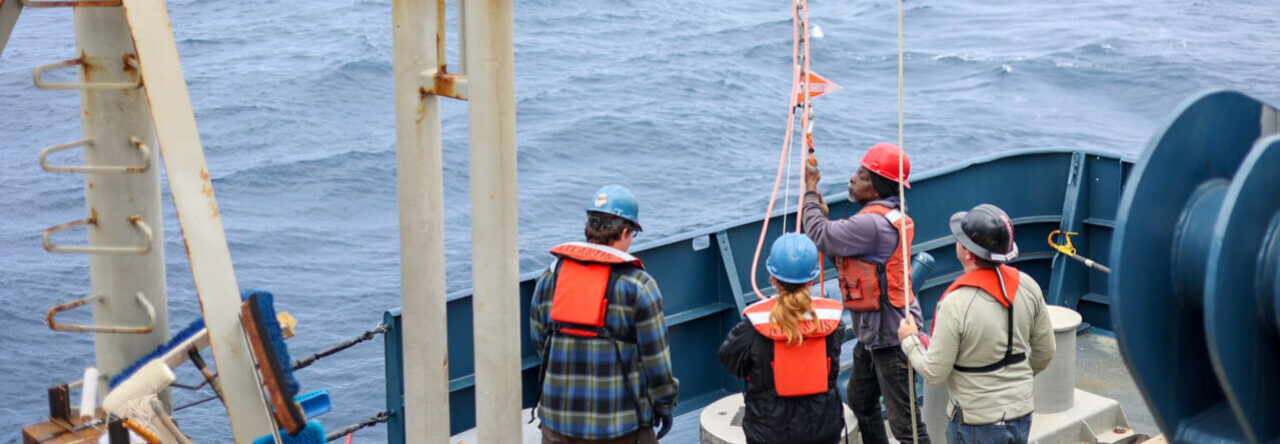
- A whole lotta different launch and retrieval deck operations (e.g. HabCam, AUV, Lander, multicorer, ROV)
- Radio communication
- Rigging techniques
- Using USBL systems and recording their data
- Cruise mobilization and demobilization experience
- Troubleshooting one Sirius XM radio
- Eating too much ice cream
- Entertaining/distracting injured researchers with music and memes
Overall, working with R/V Hugh Sharp’s team was a fantastic opportunity to gain lots of hands-on experience and learn a ton of new technical skills. While learning these new skills was great, I think the real value of this internship comes from gaining familiarity with the work that marine technicians get to do. This familiarity promotes confidence and comfort with handling the many unknowns and stressors of this job.
So thanks to everyone at UDEL for the incredible opportunity! Now, I am enjoying two weeks off before I begin the next leg of my internship in Bermuda with the BIOS team! I look forward to writing the next post and updating you all in a few weeks.
Until then keep it cool and stay curious.
All the best,
Hunter

– The last sunrise I got to see aboard the Sharp