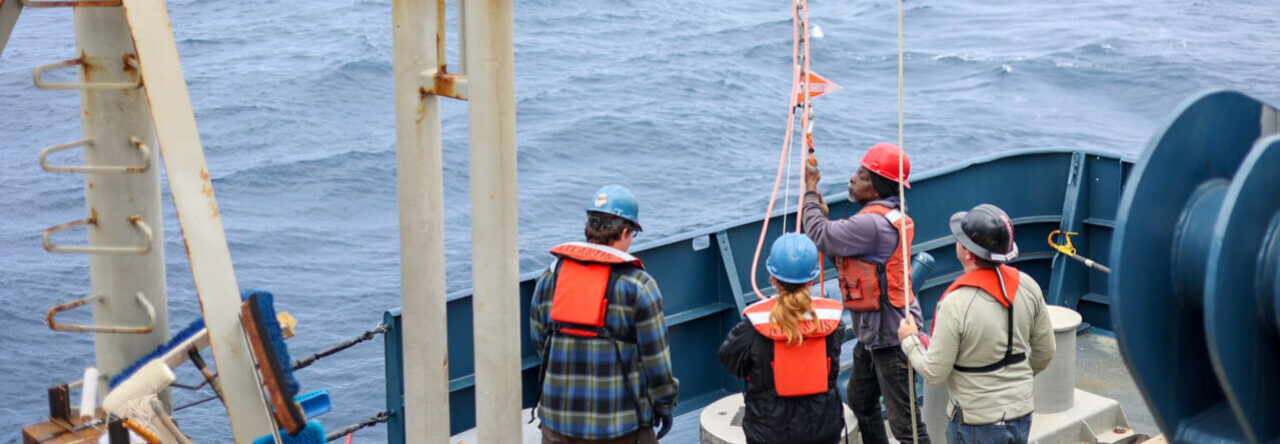
Along with a team of scientists from NOAA, we set out early Monday July 23rd from Miami with gorgeous weather and calm seas. We were on a course that would take us west through the Florida Keys and up the coast of Florida Bay. The mission was part of a greater effort referred to as South Florida Ecosystem Restoration.
South Florida’s Everglades have been in grave danger, beginning in the late 1800’s, when humans began digging canals to drain the land so that it could be populated. All through the Twentieth Century, up until the late 1980’s, these efforts continued on a large scale. The projects were successful, but the precious ecosystem paid a terrible price. As a result, the Everglades have shrunk to less than half the original size. Approximately 90% of the native birds that were once abundant have disappeared, along with countless unique wildlife species. Of the ones that remain, almost 70 species appear on the federal list of endangered or threatened wildlife.
In 1993, the South Florida Ecosystem Restoration project was formed in order to curtail the damage being done and to attempt the reversal of the destructive process. The initiative consists of federal, state, and tribal entities working together in effort to restore the priceless wetlands.
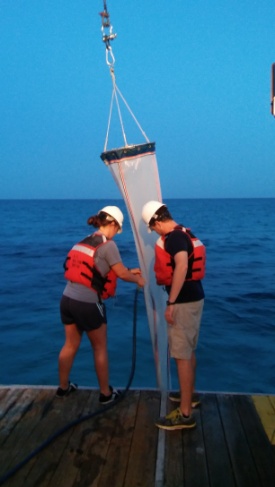
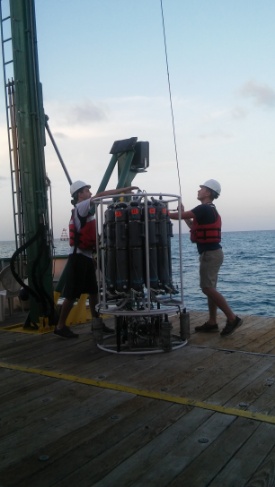
NOAA’s role in the initiative is to monitor some 80+ stations throughout the Florida Keys and coastal regions of Florida Bay and Southwest Florida Shelf. On this 5-day cruise we collected water samples around the clock at each of these locations using the ship’s CTD rosette, along with the on-board seawater flow-through system.
Lead Scientist Lindsey Visser explains, “The seawater was analyzed for chlorophyll, nutrients, and dissolved inorganic carbon as part of ongoing water quality monitoring that has occurred for decades in this region. We also used nets to collect phytoplankton and zooplankton in order supplement chlorophyll levels measured in the seawater. This dataset is used to analyze everything from the transport of nutrients and chlorophyll from the Mississippi River through the Gulf Stream off the east coast of Florida, or the conditions that are conducive to Harmful Algal Blooms off the Southwest Florida shelf.”
Another one of the issues being monitored by NOAA is the toxic algae bloom crisis which began this past spring. The toxic cyanobacteria bloom is driven by a combination of lack of infrastructure needed to raise the level of Lake Okeechobee, and runoff from manure, sewage, and fertilizer from the farming industry, namely the sugar fields, and it has taken over the Southwest Florida coastline. The algae, which can be seen from space and has resulted in massive beach closings, contains nerve toxins and is not only a possible link to diseases such as Alzheimer’s, Parkinson’s and ALS,¹ but also depletes oxygen levels, leading to massive dead zones. Among a multitude of other health risks, contact with an open wound may result in a staph infection.²
I’m grateful to have had a small hand assisting in a mission that will help further the efforts of the restoration of the environment. With big business such as US Sugar and others contributing to political interests, it will surely continue to be an uphill battle. In spite of this, it’s reassuring to know that groups like NOAA are vanguarding these issues in attempts to keep policymakers and regulators in check, and to help spread awareness of the urgent need to affect change before the ecosystem is lost to agricultural development and anthropogenic climate change.
Acknowledgment
Special thanks to NOAA Affiliate and Head Scientist Lindsey Visser for consultation/contribution regarding this post
Sources
¹ TCPalm April 14, 2016
http://www.tcpalm.com/news/indian-river-lagoon/health/scientists-toxin-in-blue-green-algae-could-trigger-neurological-diseases-2fbede92-2377-08de-e053-010-375718471.html
² Tampa Bay Times July 1, 2016
http://www.tampabay.com/news/environment/water/toxic-algae-bloom-crisis-hits-florida-drives-away-tourists/2283838