The first 24 hours onboard R/V Oceanus where rough. The vessel’s normal ±30 degree rolls eliminated my interest in any kind of food and slowed down my thinking process. I spend extended time on deck staring at the horizon or in my bed trying to rest. Since then I have been feeling much better as the sea has calmed.
The day of our departure I helped load and secure 24 ocean bottom seismometers (OBS), as part of the Cascadia Initiative offshore component. Technicians from WHOI have been deploying them at specific locations in a counterclockwise pattern approximately 170 nautical miles offshore of the Oregon coast.
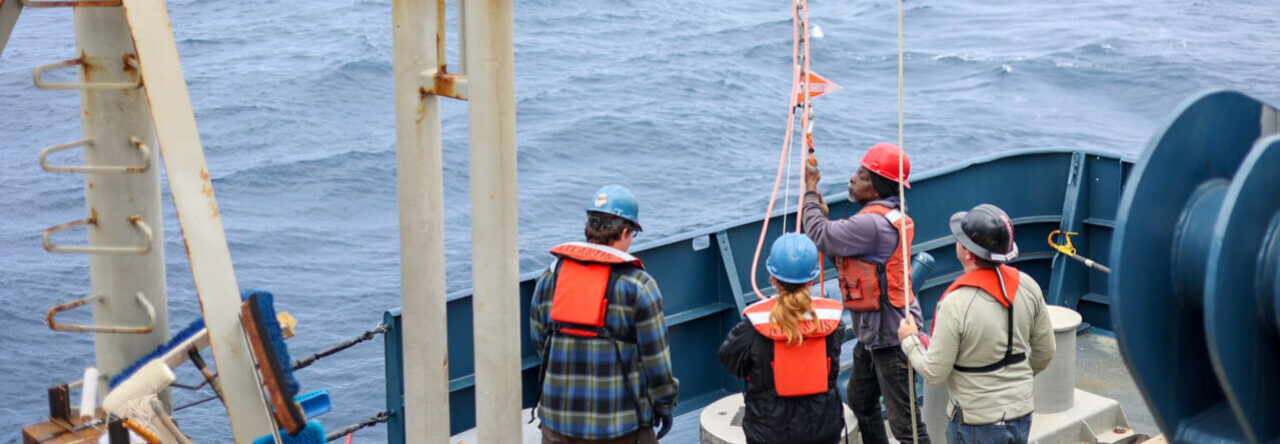
I have been on deck for all deployments so far, having the unofficial duty to take down and setup the section of rail the instrument has to clear to go overboard. It’s fascinating being involved in this process; always being aware of staying out of people’s way but still being around to learn and help. It’s also amazing to see all the specialized smaller teams coordinating with and among each other. The four WHOI marine technicians on deck that know all about the OBSs have to communicate with the scientists inside the lab that determine the deployment position, the Oceanus marine technician operating the crane, the crewmember overseeing the operation and of course the bridge where all actions are radioed in for approval.
In addition to that, I have taken up a small project to solder and pot cables that will connect the old Conductivity/ Temperature/ Density (CTD) instrument to the new type of cables. It takes extra patience with this precision work especially on a rolling vessel.
When I am not busy I read manuals on troubleshooting and operating the resident science equipment, how to use the various software, and learn how the satellite communication network works.