Hello everyone,
I have been continuing on with my internship here in Bermuda. We have only gone out on a few cruises and they have been pretty short (though everything will probably seem short after a 45 day trip!) but still full of new experiences for me. We just returned from a one day cruise that was a deep CTD cast and the recovery of an incubation chamber that we had put into the water three weeks ago but the whole trip was fairly uneventful. I have very quickly learned that “uneventful” is a wonderful magical word when describing research cruises and it means that everything went smoothly. Nothing broke down, everything went into and out of the water as it was meant to, no one was injured…uneventful in the best way possible.
During our time on land we have delved into several projects that have kept us busy. we walked through terminating the end of our CTD cable which I have mentioned before. It is a long process but a very important one and it was nice to get a really good tutorial about the process. On Monday we will terminate the actual cable instead of a practice one so I will try to include some pictures for the next post. We have also been working on the CTD itself making sure it is all ready to go for the cruise next week. There are 12 different sensors on our CTD so we have to make sure that each one is within its calibration date, is functioning properly, and that everything is very securely attached to the CTD. Sounds pretty straight forward but it can become several long days of work if things don’t go smoothly.
I was also fortunate enough to get invited to see some of the behind the scenes action involved in operating a glider. These gliders are loaded onto a ship and brought out to open waters where they are slipped into the water by hand. From there all of the action is back in a lab office at BIOS. The scientists have programmed “missions” into the glider and can send it commands from land. In the beginning the test commands are “dive to 5 meters and surface” and then “dive to 60 meters and surface”. The science team monitors the activity to make sure that all of the sensors are recording properly, that the glider is moving the way it should, and that it is following the commands it is given. Once the testing phase is done then the glider receives a longer mission that it completes on its own. It will dive to 300 meters (for example) come up to the surface and transmit the data before changing position and diving again. The gliders can stay out in the ocean for months at a time collecting data before being recovered. They are pretty amazing little fish. I wasn’t with the team when they launched the gliders but it sounds like I will get another chance to see it later this month so hopefully I can grab some pictures.
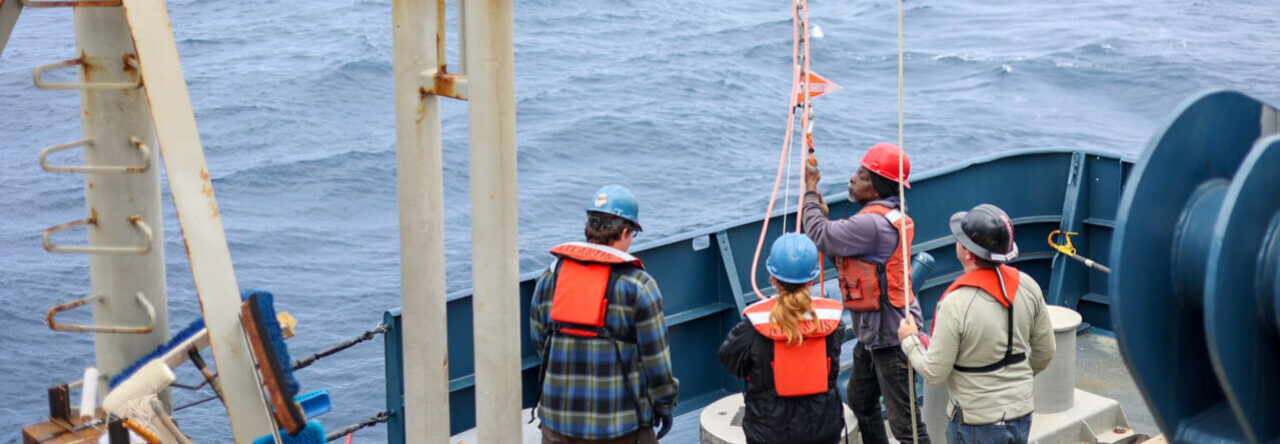
Speaking of pictures I wanted to get a few out there of the back deck of the R/V Atlantic Explorer. In my last post I mentioned it being a wet deck and if it was anything except for the calmest conditions we would get big waves over the side. Here are some pictures from our last cruise to tide you over before my next chance to take some more.
Until next time!

