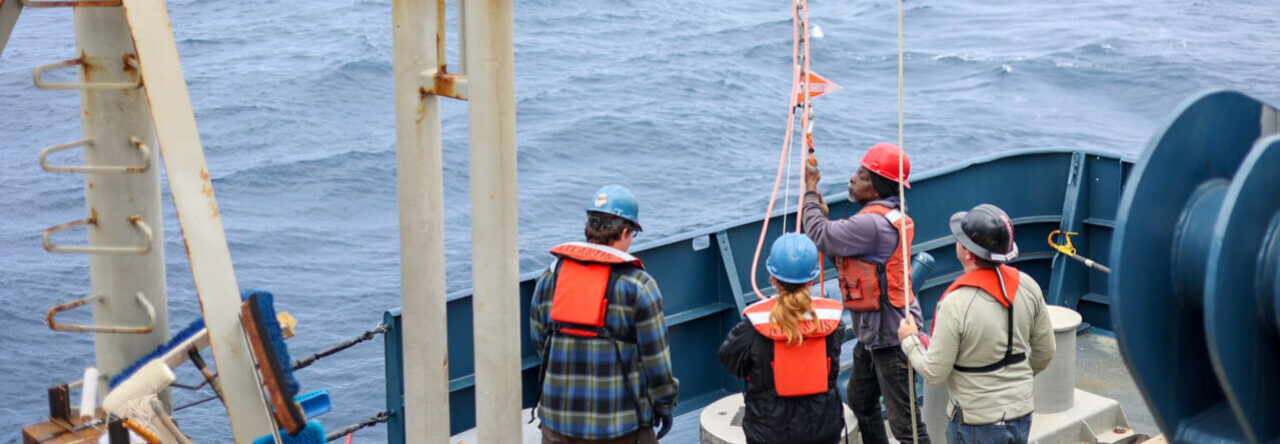
This week has been very unique to say the least. We started by finding out that one of the crew members aboard had contracted the COVID-19 virus. They were put into isolation onboard and there was limited crew working each day.
Over the week, Kyle and I cleaned all the AC units onboard, with a biodegradable all-purpose cleaner, to remove any mold growing within the turbines. This took a few hours to do each as we had to take off the case, filters, and condensate drain to be able to access the turbines. All of that was cleaned along with the turbine before the AC unit was put back together and ran again. This was a nice project to do as it was very repetitive for each AC and did not require any assistance from any of the crew. I was just a small project for us interns. Another job we did was cleaning out the back of the golfcart. There was junk in the back to throw away as well as tools that were organized and put away. The back was then washed along with the rubber mat too.
At one point, the Marine Operations Manager passed along a video about a future cruise (October/November ’22) about deploying moorings. This was a very interesting video to watch. These moorings were to be set along a transect from Jupiter, FL to the Bahamas to record current data about the Gulf Stream. This data would show how the currents change over time and between stations. The data would be collected with nine inverted echo sounders, one at each station and would be collected for five years.
On the tech side, I watched some YouTube videos about Linux, networking basics (switch, router, gateway, firewall, and DMZ), IP addressing, and subnetting. We learned how to crimp Cat 5 wire to a RJ45 connector along with the keystone jack. After given that knowledge Kyle and I were tasked with the job to add a keystone jack to the existing wire to the camera in the bridge and then create a patch cable (length of Cat 5 cable with RJ45 connectors on each end) to connect the camera to the existing wire. Once that was completed and the camera was connected it was finally working again. We than did the same thing to the port engine room camera wiring. Once done, we connected the bridge camera, as the engine room camera is broken, to find out it still would not work. The marine tech then showed us some of the tools he has onboard to test cable to ensure that the cable is in working condition. We used a MicroScanner Cable Verifier to troubleshoot the cable and connections. This device was able to tell us if there was a short in the wire, open or crossed wire, and the length of the wire. After scanning from different connections that the wire would transmit to, it was determined that the wire was in working conditions and this was a problem on the campus IT side. After this project, our new project was to run cat 5 cable from under the port and starboard nav light platform (to add new cameras) all the way down to the tech space to connect to the switch. In a few hours we were able to run the cable through the ceiling of one of the staterooms and onto the racetrack where it then was able to follow the other wires down to the tech space.
The last job completed with the engineer was finally replacing the rubber diaphragm to the pump for the black water. Today, 6/13, Kyle and I were able to remove the diaphragm, with guidance from the engineer on the best way to remove the connecting rod and assembly. We were able to remove the diaphragm and connecting rod and clean it and then silicone it to the new diaphragm per the manual instructions.
Over the weekend, I took it easy and relaxed one day, while getting a nice sunburn. The next day Jon invited Kyle and I along on a paddle board/kayak trip to a shipwreck on a shoal off Key Biscayne where we snorkeled the wreck. It was interesting to see as there was growth all over the ship the many fish lived in and around it. The ship sunk nearly 100 years ago and is now Florida’s seventh Underwater Archaeological Preserve. After we came back from the trip, time was spent relaxing in the water when there was word of a manatee coming our way. It passe within 6-10 feet of us. It was a great experience to see.
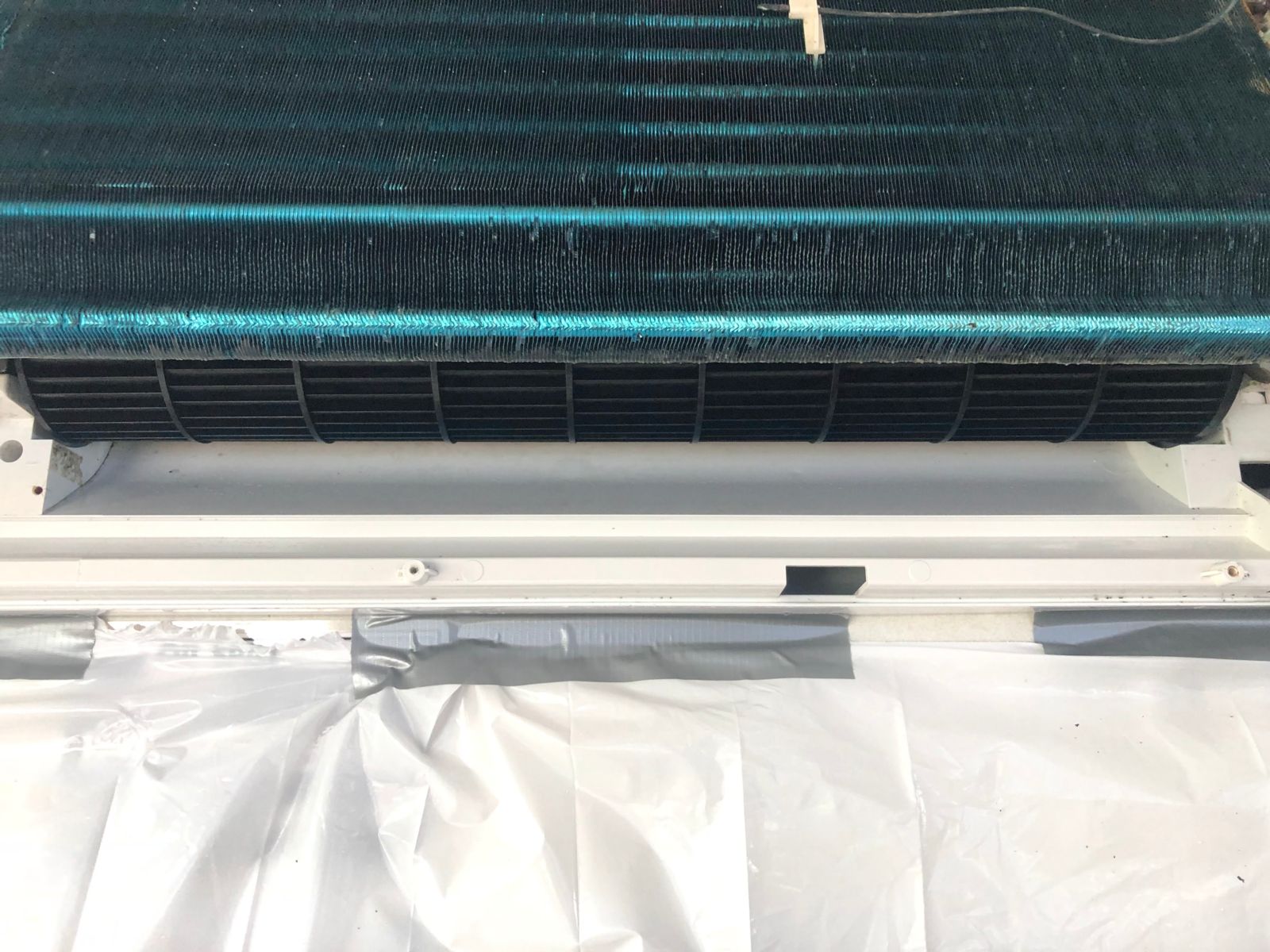
A freshly cleaned AC unit cleaned with PurplePower
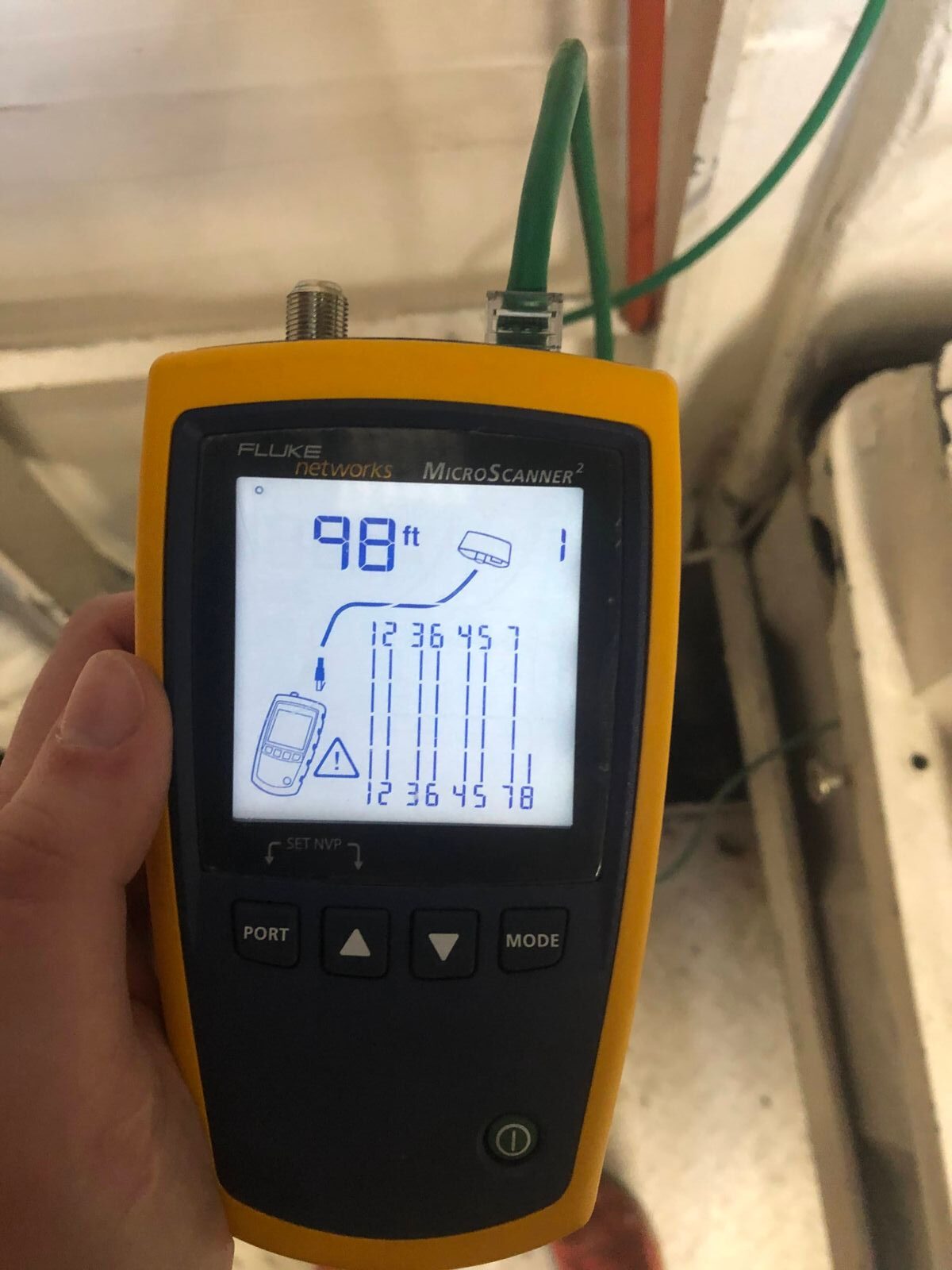
The Microscanner Cable Verifier. It is showing that the cable it is connected to is 98 feet long, there is no crossover in the wire (all the numbers match to each other and not a different number i.e., 1&3, 2&6), and there is a connection problem with prong 8 of the other end of the cable that is connected to the wiremap adapter (not shown).
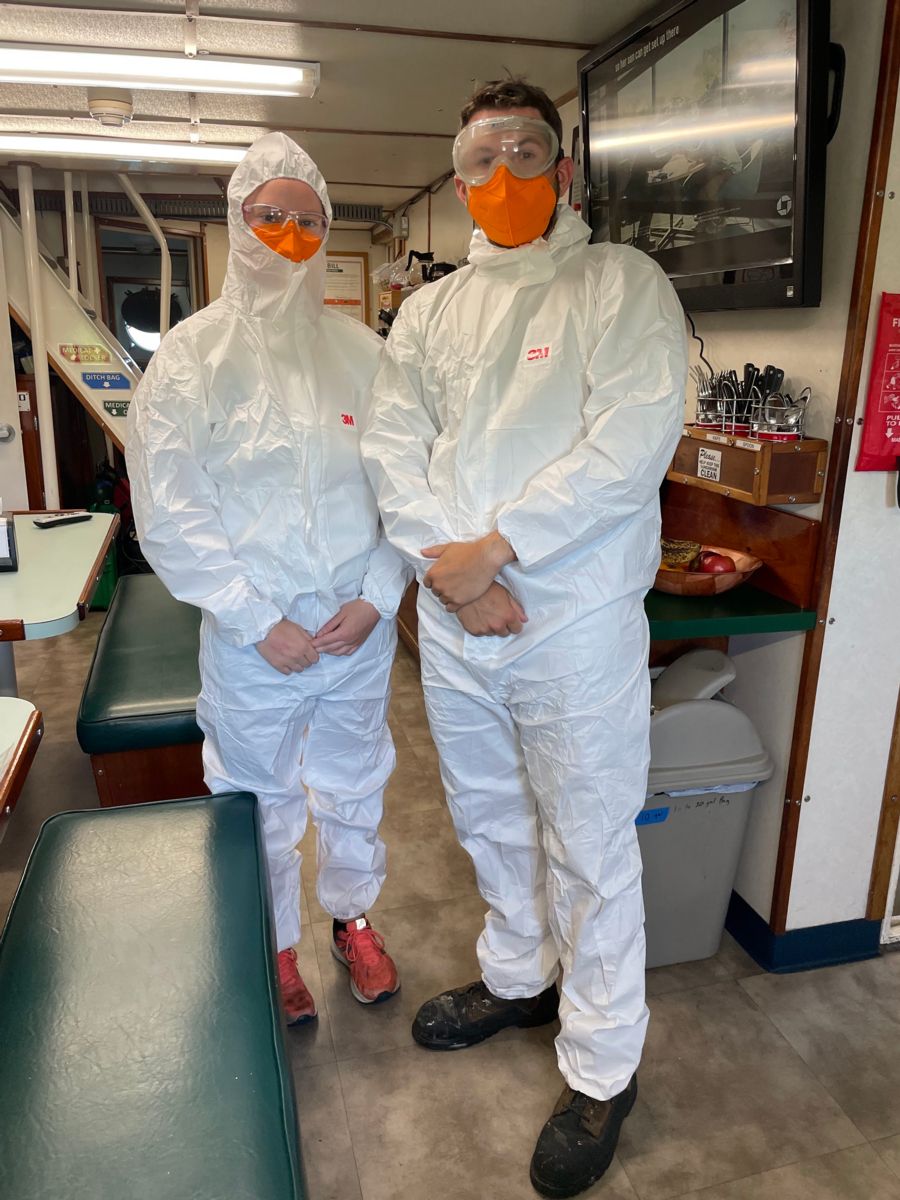
Kyle and I all suited up in our Tyvek suits getting ready to fix the head system pump. It was a gross job the included my glove ripping.