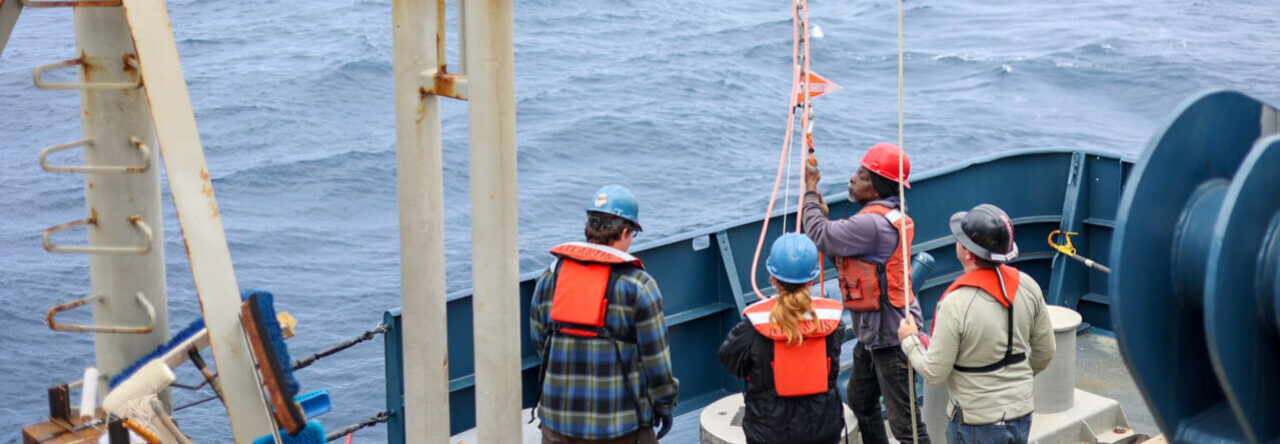
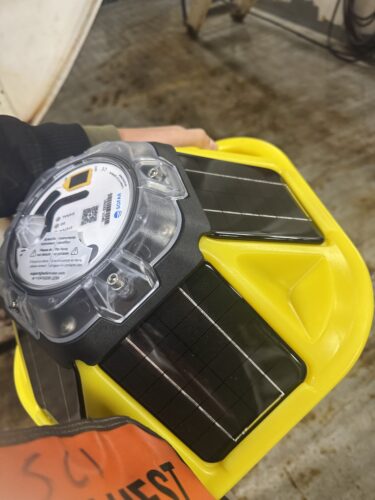
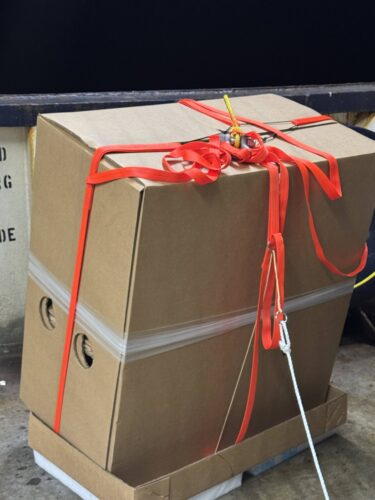
Over the course of this last week (April 15-23), I’ve had the great pleasure of assisting in the R/V Marcus G. Langseth‘s procedures for getting underway and initiating its essential scientific systems. Two days before leaving port I arrived on the ship to begin loading and securing outgoing scientific gear destined for other UNOLS facilities such as the UH Marine Center in Honolulu. Additionally, we began stowing the mission critical equipment that we would later be testing, maintaining, and in some cases deploying. As such I began familiarizing myself with the ships laboratories and main deck spaces that we would be using over the next few weeks to deploy SOFAR buoys along with both “Deep” and “Core” variation of Argo Floats. A-Frame calibration checks were done to ensure accurate tension readings from the winch system and in order to begin preparing it for our use in future CTD/ rosette carrousel deployments. In our last day before leaving San Diego, we secured our remaining scientific equipment through the use of unistrut eye-bolts and ratchet straps before reviewing key documents related to the ship’s systems such as its coaxial camera to video system infrastructure.
—Underway from SD —
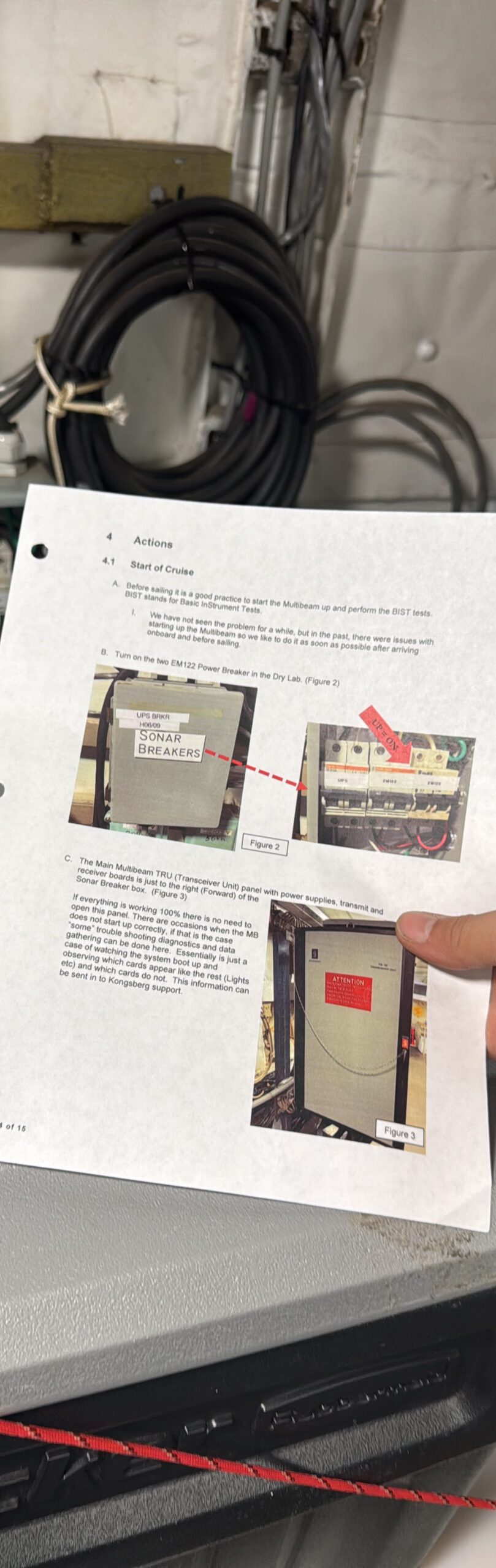
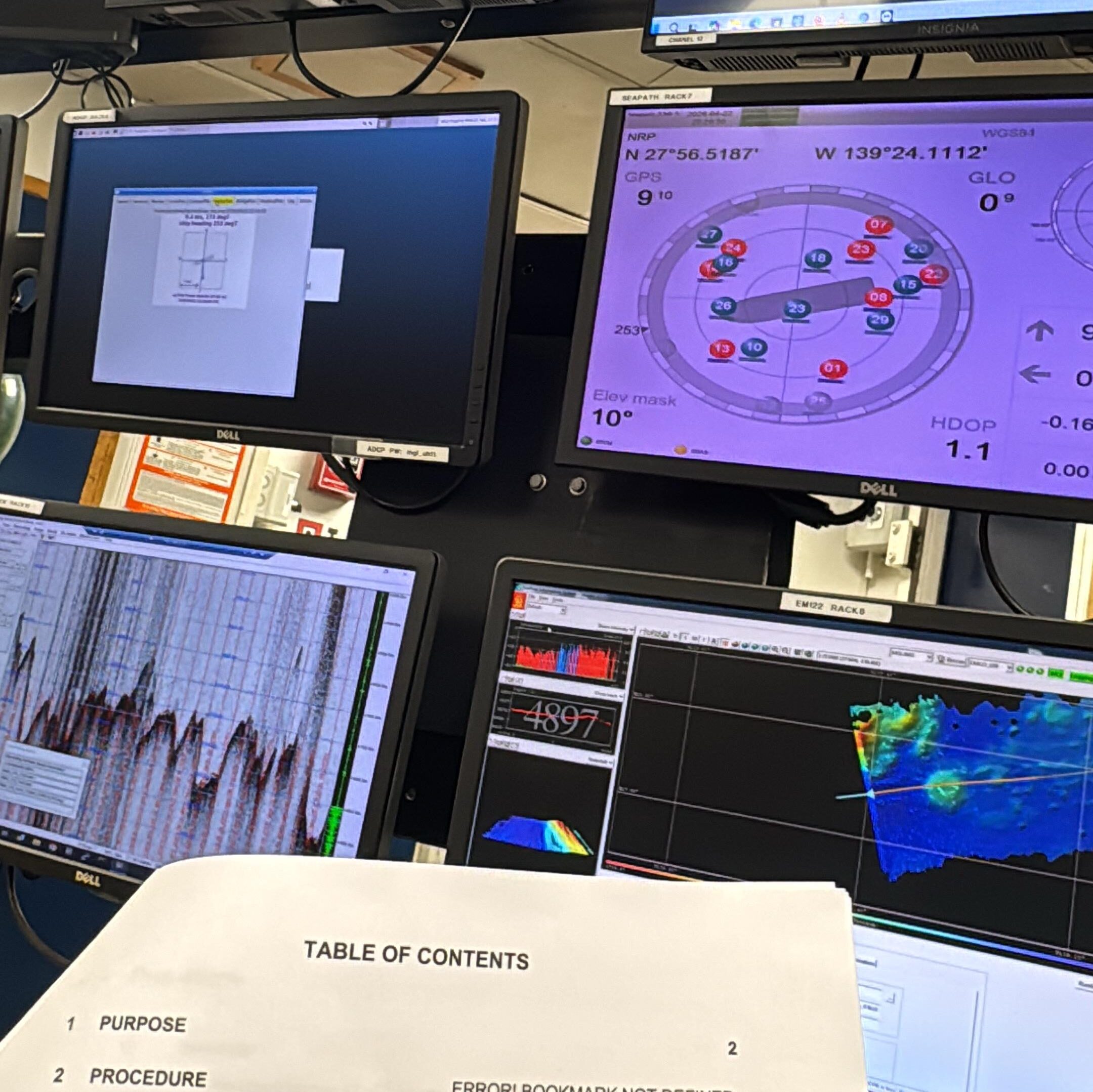
This first week of the transit from san Diego to Honolulu has been highly demanding and busy, we began the week with securing miscellaneous equipment while beginning our transit out of the bay and into deeper waters. Throughout this time we took advantage of the calm waves to add fixtures in both the ship’s wet-lab and dry-lab that would ensure better access and protection to the science team’s equipment, especially considering our expectation of encountering rough weather within the next few days. Once out of the coast, we began powering the ship’s multi-beam echosounder (an EM122 by Kongsberg), ‘CHRP’ ADCP (3260 Echosounder by Knudsen) and SeaBird SBE systems. Shortly after, we noticed incongruencies on the live data between the ADCP and echosounder’s depth readings and began early troubleshooting efforts which were finalized by that afternoon.
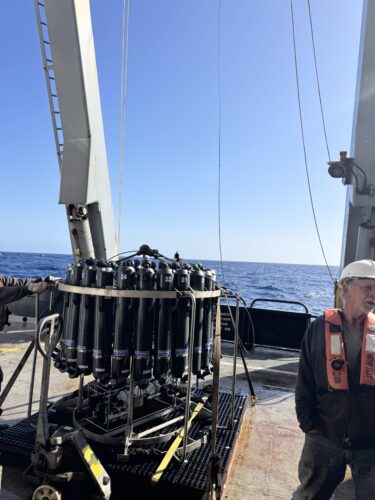
The next two days were spent focusing on deploying and testing our CTD system, during the morning deployment all systems worked nominally until we reached 100m, at which point we stopped receiving data but still held a firm connection between the deckbox and CTD module. As such the rest of the day was spent troubleshooting the system and having a post-launch debrief on our next steps.
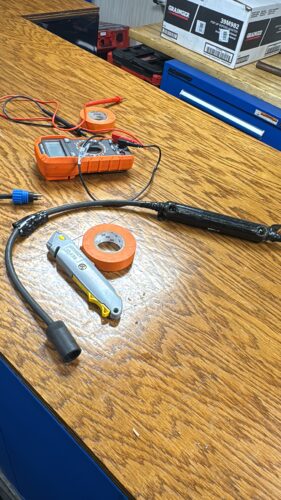
Later on we would find that the CTD’s deckbox to sea cable fuse had blown and as such began testing the sea cable’s wiring in an effort to locate a possible short, this would later lead to us tracing the short to the terminations between the seacable and CTD plug.
During the next day we deployed our first SOFAR buoy at 5am and as part of our daily checks ensured that the temperatures of our sample-housing refrigerator units remained nominal. As part of an ongoing project to improve the infrastructure of our pCO2 measuring system we also began mounting a dedicated bracket for it’s dedicated power station, that same afternoon we would also begin a lengthy process to activate and at times de-airlock this delicate gas-mixture dependent piece of equipment.
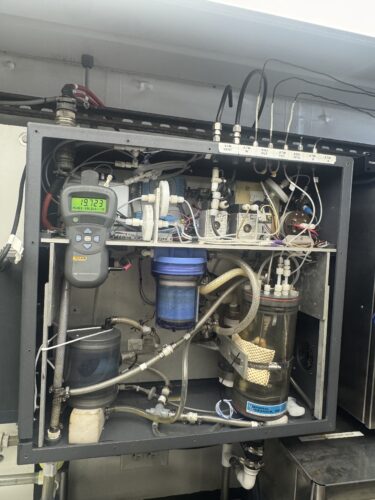
The remainder of the week would be characterized by troubleshooting some of the ship’s server room computers which had lost their remote-connection capabilities due to power lapses, along with launching two more SOFAR buoys, an Argo “Core” float and an argo “Deep” float.
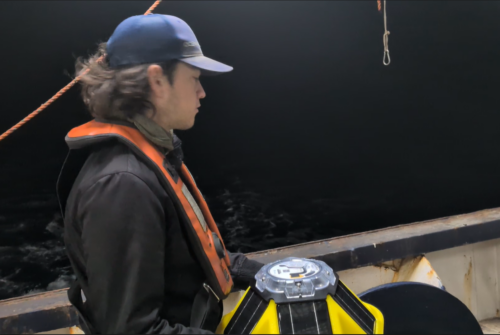
Our work continues on the ship and weather has calmed extensively, dropping our previous roll of nearly 5.2 degrees and heave of 5m to a 1 degree roll and 0.5m heave. Conditions continue to improve with our approach into tropical waters and the next log will be marked by us crossing the Tropic of Cancer. I am extremely glad to have this opportunity of assisting on board and greatly look forward to the next few weeks!
Fair Winds and Following Seas,
-Conrado A.B.